
Horror Subgenres Explained: The Essential Guide to Every Type of Horror (2026)
Slasher, folk horror, analog horror and 25+ more. Every horror subgenre explained in plain words, with the best movies to start each one.

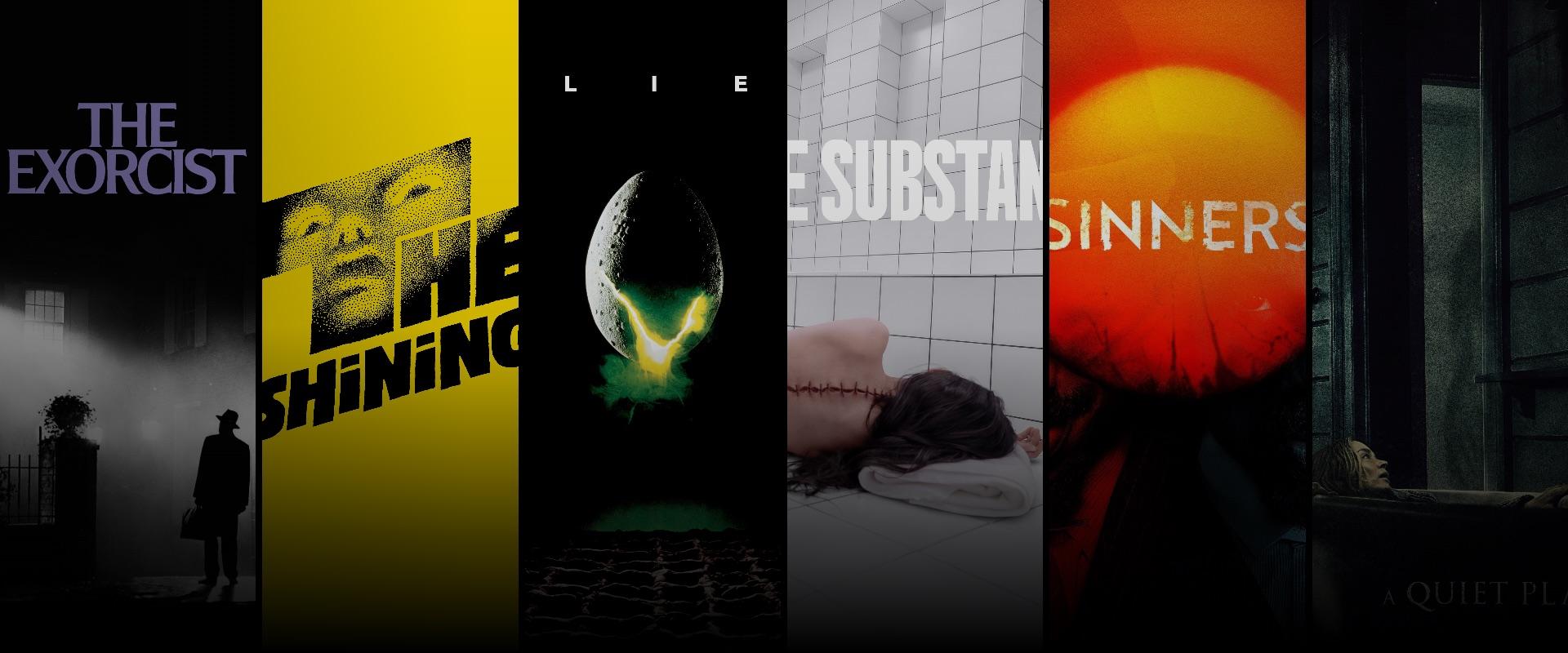
Not all horror is scary in the same way
Show a slasher fan a slow, quiet ghost story and they will check their phone in 20 minutes. Show a ghost story fan a blood-soaked slasher and they will ask, "What was the point?"
They both love horror. They just love different horror.
And right now, more people are watching horror than ever. In 2025, horror took about 16% of all US box office money, around $1.34 billion, the genre's biggest share this century, according to The Numbers. In India, the horror-comedy Stree 2 became the highest-grossing Hindi film ever at home. In Indonesia, horror films sold about 70% of all local movie tickets in 2024, The Japan Times reported.
So why do some horror movies terrify you while others bore you? The answer is almost always the subgenre.
This is HorrorJungle's complete guide to every major type of horror. We read film-school guides, studied fan debates on Reddit's r/horror, r/analog_horror and r/IndianCinema, checked box office records, and looked at horror from Hollywood to Mumbai to Jakarta. By the end, you will know exactly what kind of horror fan you are, and what to watch next.
Let's open the door. Carefully.
What is a horror subgenre?
A horror subgenre is a smaller family inside horror, grouped by where the fear comes from.
That is the simple trick to understanding all of them. Ask one question: What is the threat?
- A ghost or demon? That is supernatural horror.
- A masked killer? That is a slasher.
- Your own mind? That is psychological horror.
- Your own body turning against you? That is body horror.
- A village with strange old traditions? That is folk horror.
Most movies mix two or three. Train to Busan is zombie horror plus a family drama. Get Out is psychological horror plus social thriller. Stree is a ghost story plus comedy. That is normal. Think of subgenres like flavours, not boxes.
All the major horror subgenres at a glance
| Subgenre | The fear in one line | Start with | Scare level (out of 5) |
|---|---|---|---|
| Supernatural / Ghost | The dead are not gone | The Conjuring (2013) | 4 |
| Possession / Demonic | Something evil is inside someone you love | The Exorcist (1973) | 5 |
| Slasher | A killer is picking people off one by one | Halloween (1978) | 3.5 |
| Creature / Monster | Something big and hungry is hunting you | Jaws (1975) | 3 |
| Zombie | The dead walk, and they are coming for you | Train to Busan (2016) | 3.5 |
| Vampire | Something feeds on you to live | Sinners (2025) | 3 |
| Psychological | You cannot trust your own mind | The Babadook (2014) | 4 |
| Body horror | Your body is changing and you cannot stop it | The Substance (2024) | 4 |
| Cosmic | The universe is huge, ancient and does not care | The Thing (1982) | 3.5 |
| Gothic | Old houses, old secrets, old sins | Crimson Peak (2015) | 2.5 |
| Home invasion | Someone is inside your house | The Strangers (2008) | 4.5 |
| Survival | Nature or people want you dead, far from help | The Descent (2005) | 4.5 |
| Folk horror | The village has a ritual, and you are part of it | The Wicker Man (1973) | 3.5 |
| Occult / Witchcraft | Old magic, dark deals | Hereditary (2018) | 5 |
| Sci-fi horror | Science or space creates the monster | Alien (1979) | 4 |
| Found footage | You are watching "real" recovered video | The Blair Witch Project (1999) | 4 |
| Analog horror | Old TV broadcasts and tapes that feel wrong | Local 58 (web series, 2015) | 4 |
| Elevated / Art horror | Slow, symbolic horror about grief and trauma | The Witch (2015) | 3.5 |
| Horror comedy | Laughs and screams at the same time | Shaun of the Dead (2004) | 1.5 |
| Giallo | Stylish Italian murder mysteries | Deep Red (1975) | 3 |
| Extreme / Splatter | Maximum gore, minimum mercy | Terrifier 2 (2022) | 4 |
Scare levels are our own rating for the starter film, based on how fans in horror forums describe them. Your nerves may vary.
Part 1: The classics (ghosts, demons, killers and monsters)
These are the subgenres everyone knows, even people who "don't watch horror". They are the foundation everything else is built on.
1. Supernatural and ghost horror
What it is: The threat comes from beyond the living world. Ghosts, spirits, curses and haunted places.
How to spot it:
- Doors open by themselves, and there is a cold spot in one room
- Someone tries to talk to the dead (Ouija boards, seances, a medium)
- The house usually has a dark past that the family learns about too late
Must-watch: The Haunting (1963), Poltergeist (1982), The Others (2001), The Conjuring (2013)
Why it works: Almost every culture on earth has ghost stories. This subgenre taps into a fear that is older than cinema itself: that death might not be the end.
2. Possession and demonic horror
What it is: An evil force takes over a person's body, usually someone innocent like a child. A priest, shaman or exorcist must fight it.
How to spot it:
- A sweet person suddenly speaks in a strange voice or language
- Crosses turn upside down, holy objects burn
- A big ritual or exorcism scene near the end
Must-watch: The Exorcist (1973), The Conjuring 2 (2016), The Wailing (2016), Exhuma (2024)
Fun fact: The Exorcist was the first horror film ever nominated for the Best Picture Oscar. Fifty years later, possession films are still some of the most reliable box office hits in the world, from Hollywood to Seoul.
3. Slasher
What it is: One killer, usually masked and silent, picks off a group of people one by one with a knife, machete or chainsaw.
How to spot it:
- A group of teens or friends in an isolated place
- The killer seems unstoppable and keeps coming back
- One smart survivor makes it to the end, known as the "final girl"
Must-watch: Halloween (1978), A Nightmare on Elm Street (1984), Scream (1996), X (2022)
Fun fact: The term "final girl" comes from film scholar Carol Clover's 1992 book Men, Women, and Chain Saws. And Scream became famous for having its characters say the slasher "rules" out loud, then breaking them.
4. Creature and monster horror
What it is: Something that is not human, and much bigger or stronger, is hunting people. Sharks, giant lizards, aliens, things from the deep.
How to spot it:
- You hear it or see the damage long before you see the creature
- The smart move is always to run, and someone never does
- Often a message about nature, science or human greed
Must-watch: Jaws (1975), The Host (2006), A Quiet Place (2018), Godzilla Minus One (2023)
Why it works: The best monster films keep the creature hidden. Jaws barely shows the shark for most of the film, partly because the mechanical shark kept breaking down. The fear of what you cannot see did the rest.
5. Zombie
What it is: The dead come back to life, or people become infected, and they want to eat or spread to the living.
How to spot it:
- A bite or scratch means you are doomed
- Survivors hide in a mall, a house, a train or a prison
- The other survivors often turn out to be more dangerous than the zombies
Must-watch: Night of the Living Dead (1968), 28 Days Later (2002), Train to Busan (2016), Colony (2026)
Fun fact: George A. Romero basically invented the modern zombie in Night of the Living Dead, but the word "zombie" is never actually used in that film. 28 Days Later later made zombies fast, and fans still argue about whether fast or slow zombies are scarier.
6. Vampire (and other classic monsters)
What it is: A creature that looks human but feeds on people to survive. This family also includes werewolves, mummies and Frankenstein-style creations.
How to spot it:
- Rules: they cannot enter unless invited, they fear sunlight, garlic or silver
- Often romantic, tragic or about forbidden desire
- Old money, old castles or a mysterious new neighbour
Must-watch: Nosferatu (1922 and 2024), Let the Right One In (2008), Thirst (2009), Sinners (2025)
Fun fact: Vampires are back in a huge way. Ryan Coogler's vampire film Sinners was the highest-grossing horror movie of 2025 in the US, earning about $279.7 million there, according to The Numbers.
Part 2: Horror of the mind and body
These subgenres do not need a knife or a ghost. The scariest thing is inside you.
7. Psychological horror
What it is: The horror comes from the mind. Paranoia, guilt, grief, madness. Often you are not sure what is real and what the character is imagining.
How to spot it:
- The main character is falling apart, and so is your trust in them
- Very little blood, a lot of tension
- The ending makes you rethink the whole movie
Must-watch: Psycho (1960), The Shining (1980), Black Swan (2010), The Babadook (2014), Bhoothakaalam (2022)
Why it works: You can run from a monster. You cannot run from your own head. That is why psychological horror often stays with people longer than any jump scare.
8. Body horror
What it is: The body becomes the monster. Flesh mutates, melts, transforms or gets invaded. It is about losing control of the one thing you thought you owned.
How to spot it:
- Close-ups that make you look away (and then look back)
- Diseases, experiments, parasites or strange surgeries
- Practical effects and makeup doing the heavy lifting
Must-watch: The Fly (1986), Videodrome (1983), Possessor (2020), The Substance (2024)
Fun fact: Director David Cronenberg is called the "King of Body Horror" for films like The Fly. In 2024, The Substance brought the subgenre to the mainstream and won the Oscar for makeup and hairstyling.
9. Cosmic horror (Lovecraftian horror)
What it is: The fear that the universe is huge, ancient and full of powers so big that humans are like ants to them. Knowing the truth can drive you mad.
How to spot it:
- A creature or force that is impossible to fully describe
- Scientists, explorers or researchers finding something they should not
- Usually no happy ending, because you cannot beat the universe
Must-watch: The Thing (1982), Event Horizon (1997), The Void (2016), Annihilation (2018), Tumbbad (2018)
Where the name comes from: Writer H.P. Lovecraft, whose 1928 story The Call of Cthulhu created the most famous cosmic monster of all. Critics and fans often call Tumbbad, with its forgotten, hungry god in the womb of the earth, Lovecraftian, and it may be the best cosmic horror film India has made.
10. Gothic horror
What it is: The oldest branch of horror. Crumbling mansions, candlelight, family curses, secrets in the walls and a dark romance or two. It is more about mood than scares.
How to spot it:
- A huge old house that feels alive
- Long dresses, storms, portraits whose eyes seem to follow you
- A family secret that has been buried for generations
Must-watch: The Innocents (1961), Crimson Peak (2015), The Others (2001), Bramayugam (2024)
Fun fact: Gothic horror began in books, not films. The Castle of Otranto (1764) is often called the first gothic novel, and Frankenstein (1818) and Dracula (1897) came from the same tradition. Mammootty's black-and-white Bramayugam shows the style works just as well in a Kerala mansion as in an English castle.
Part 3: Real-world fears (people, places and old traditions)
No ghosts needed. These subgenres take things that could actually happen and push them as far as they go.
11. Home invasion
What it is: Strangers break into the one place you should feel safe: your home. Sometimes they want money. Sometimes they just want to scare you. The worst ones have no reason at all.
How to spot it:
- A knock on the door late at night
- Masks, phone lines cut, power out
- The family has to fight back using whatever is in the house
Must-watch: Funny Games (1997), The Strangers (2008), You're Next (2011), Don't Breathe (2016), Us (2019)
Why it works: Many horror fans on forums rate this the scariest subgenre for one simple reason: it could happen tonight.
12. Survival horror
What it is: People are stuck somewhere far from help: a cave, a forest, the desert, the ocean. They must survive nature, a monster, or other humans.
How to spot it:
- A trip goes wrong, the phone has no signal
- Injuries, hunger and panic make people turn on each other
- The setting itself feels like the villain
Must-watch: The Texas Chain Saw Massacre (1974), The Descent (2005), Green Room (2015), The Ritual (2017)
Fun fact: Survival horror is also a famous video game genre, made popular by Resident Evil (1996) and Silent Hill (1999). The films and the games have been borrowing ideas from each other ever since.
13. Folk horror
What it is: An outsider arrives in a remote village or rural place where locals follow ancient beliefs, rituals and traditions. The outsider slowly realises those rituals have a role for them.
How to spot it:
- Beautiful countryside, sunny days, smiling locals who are just slightly off
- Festivals, harvests, masks, flower crowns, old songs
- The horror is the community, not one villain
Must-watch: The Wicker Man (1973), The Witch (2015), Midsommar (2019), Tumbbad (2018), Fréwaka (2025)
The origin story: British horror fans talk about the "unholy trinity" of folk horror: Witchfinder General (1968), Blood on Satan's Claw (1971) and The Wicker Man (1973). The term "folk horror" itself was used by director Piers Haggard in a 2004 interview and made popular by Mark Gatiss in his 2010 BBC series A History of Horror. Today, as the BFI explains, folk horror lives far beyond Britain, from Korean shaman rituals to Indian village legends.
14. Occult, witchcraft and cult horror
What it is: Dark magic, secret societies, devil worship and people who will do anything for power. Sometimes it is a coven of witches. Sometimes it is your friendly neighbours.
How to spot it:
- Strange symbols, candles, chanting and old books
- Someone made a deal, often generations ago
- Family members acting like they know something you don't
Must-watch: Rosemary's Baby (1968), Suspiria (1977), Hereditary (2018), Late Night with the Devil (2023)
Why it works: The fear is betrayal. In most cult and occult films, the people you trust most are the ones setting the trap.
15. Sci-fi horror
What it is: Science, technology or space creates the threat. Alien life, experiments gone wrong, killer AI, deadly viruses.
How to spot it:
- A spaceship, lab or research station far from help
- "We should not have opened that"
- Big questions about what makes us human
Must-watch: Alien (1979), The Thing (1982), Event Horizon (1997), M3GAN (2022)
Fun fact: Alien's famous poster line, "In space no one can hear you scream," may be the best one-sentence summary of sci-fi horror ever written.
Part 4: New-age and niche horror (where the internet argues the most)
This is where horror gets weird, divisive and very online. Some of these are styles more than subgenres, but every horror fan should know them.
16. Found footage
What it is: The movie pretends to be real video recorded by the characters, then "found" later. Shaky cameras, night vision, phone screens, security cams.
How to spot it:
- Someone keeps filming when any normal person would drop the camera and run
- Long silent shots where you search every corner of the frame
- An opening text that says the footage was recovered
Must-watch: The Blair Witch Project (1999), [REC] (2007), Paranormal Activity (2007), Gonjiam: Haunted Asylum (2018), Deadstream (2022)
Why studios love it: It is cheap. The Blair Witch Project was made for around $60,000 and earned nearly $250 million worldwide. Paranormal Activity cost roughly $15,000. Few genres in film history can turn so little money into so much fear.
17. Analog horror
What it is: The newest subgenre on this list, born on YouTube. It looks like old TV broadcasts, VHS tapes, emergency alerts and training videos from the 80s and 90s, but something is very, very wrong with them.
How to spot it:
- Grainy video, distorted colours, robotic text-to-speech voices
- Calm instructions that slowly become terrifying ("Do not look at the moon")
- Short episodes you have to piece together like a puzzle
Must-watch: Local 58 (2015), Gemini Home Entertainment (2019), The Mandela Catalogue (2021), The Backrooms (2022)
The origin story: Kris Straub's YouTube series Local 58 gave the genre its name through its own tagline, "Analog horror at 476 MHz", as Looper explains. Then a teenager from Wisconsin, Alex Kister, made The Mandela Catalogue, and Kane Parsons was just 16 when he uploaded his first Backrooms video. Analog horror is proof that you no longer need a studio to scare millions of people. Some of these creators have since moved into feature films.
18. Elevated horror (also called art horror or post-horror)
What it is: A label for slow, artistic, symbolic horror films that focus on grief, trauma, family and big themes rather than jump scares. Mostly linked to the studio A24.
How to spot it:
- Long, quiet shots and a lot of dread before anything happens
- The monster is really a metaphor (for grief, guilt, depression)
- People argue on Reddit for days about what the ending meant
Must-watch: The Babadook (2014), The Witch (2015), Get Out (2017), Hereditary (2018), Midsommar (2019)
The big fight: This is the most hated term in horror. Jordan Peele, John Carpenter and James Wan have all rejected it, and Barbarian director Zach Cregger called it useless, as MovieWeb reported. The complaint is simple: calling some horror "elevated" suggests the rest is low. Horror critic Joe Bob Briggs famously joked that it is a term used by people who hate horror to describe the horror films they happen to like. Our take? The films are great. The label is the problem.
19. Horror comedy
What it is: Scares and laughs in the same film. Sometimes a spoof, sometimes a real horror film with a sense of humour.
How to spot it:
- Characters make jokes about horror rules while breaking them
- Gore so over the top it becomes funny
- You scream, then laugh at yourself for screaming
Must-watch: Shaun of the Dead (2004), What We Do in the Shadows (2014), Stree (2018), Ready or Not (2019), Dead Talents Society (2024)
The India factor: No subgenre has exploded in India like this one. Maddock Films' horror-comedy universe gave us Stree, Bhediya and Munjya, and Stree 2 (2024) became the first Hindi film ever to cross ₹600 crore at the Indian box office, the makers announced. Horror comedy is now one of the safest bets in Bollywood.
20. Giallo
What it is: A stylish Italian murder-mystery horror style from the 1960s and 70s. A killer in black gloves, beautiful victims, bold colours, wild music and a twist reveal.
How to spot it:
- Black leather gloves and a shiny blade
- Bright reds, blues and greens in every scene
- A witness who saw something important but cannot remember it
Must-watch: Blood and Black Lace (1964), The Bird with the Crystal Plumage (1970), Deep Red (1975)
Where the name comes from: Giallo means "yellow" in Italian. Cheap crime novels in Italy had yellow covers, and the name stuck to the films. Giallo is the grandparent of the American slasher, so if you love Halloween or Scream, you owe a thank-you to directors like Mario Bava and Dario Argento.
21. Extreme horror and splatter
What it is: Horror that goes as far as possible with gore, violence and cruelty. The goal is to shock and test how much you can take.
How to spot it:
- Practical gore effects that feel painfully real
- Very little hope, very little mercy
- Online warnings, dares and reaction videos
Must-watch (strong stomachs only): Martyrs (2008), I Saw the Devil (2010), Terrifier 2 (2022)
Fun fact: Terrifier 2 became famous in 2022 after reports of people fainting and throwing up during screenings. The publicity turned a small indie slasher into a word-of-mouth hit and launched a franchise.
Part 5: Horror around the world (regional styles you should know)
Some of the best horror today is not in English at all. Each country scares people in its own way, shaped by its religion, history and folk tales.
| Style | What makes it different | Start with | Did you know? |
|---|---|---|---|
| J-horror (Japan) | Quiet, slow, vengeful female ghosts with long black hair, curses passed on like a virus | Ringu (1998) | Ringu was remade by Hollywood as The Ring (2002) and started the Asian horror remake boom |
| K-horror (South Korea) | Family pain, shamans, social anger, genre mixing, no safe endings | The Wailing (2016) | Exhuma (2024) sold over 11.5 million tickets in Korea |
| Indian horror | Folk legends, village curses, haunted havelis, and lately lots of comedy | Tumbbad (2018) | Stree 2 (2024) became the highest-grossing Hindi film ever in India |
| Thai horror | Buddhist karma, revenge spirits, shocking twists | Shutter (2004) | Thai shamanism inspired The Medium (2021), co-made with Korea's Na Hong-jin |
| Indonesian horror | Black magic, cursed villages, Islamic and Javanese folklore | Satan's Slaves (2017) | KKN di Desa Penari (2022) was the first local film to hit 10 million tickets in Indonesia |
| Latin American horror | Possession, poverty, violence and folk legends like La Llorona | When Evil Lurks (2023) | Argentina's When Evil Lurks became a global cult hit |
J-horror: the quiet that screams
Japanese horror made the whole world afraid of videotapes, wet hair and the sound of a creaking neck. Its ghosts, called onryō, are usually women wronged in life who come back for revenge. The scares are slow and patient. Start with Ringu (1998), then Ju-On: The Grudge (2002) and Pulse (2001).
K-horror: where family and fear collide
Korean horror mixes ghosts, zombies and shamans with real social anger, and almost never promises a happy ending. We ranked the 25 best in our guide to the Best South Korean Horror Movies Ranked. Start with The Wailing, Train to Busan and A Tale of Two Sisters.
Indian horror: from Ramsay to Tumbbad to Stree
Indian horror used to mean low-budget haunted mansion films, especially from the famous Ramsay Brothers in the 70s and 80s. Then came a new wave. Tumbbad (2018) showed India could make world-class folk horror. Malayalam cinema gave us Bhoothakaalam (2022) and Bramayugam (2024). And Maddock's horror-comedy universe turned Stree 2 into a record-breaking blockbuster. Few countries right now have horror this varied.
Indonesian horror: the scariest country on the planet right now?
In 2024, horror made up about 60% of all films produced in Indonesia and about 70% of local movie tickets sold, according to the Indonesian Film Board, as reported by The Japan Times. Director Joko Anwar's Satan's Slaves (2017) and Impetigore (2019) are the best entry points. If you love folk horror, Indonesia is your next obsession.
Thai and Latin American horror
Thailand's Shutter (2004) is still one of the most twist-heavy ghost stories ever made. In Latin America, Tigers Are Not Afraid (2017) from Mexico and When Evil Lurks (2023) from Argentina show how real-world violence and poverty can make supernatural horror hit even harder.
Which horror subgenre is right for you?
Still not sure where you fit? Find the line that sounds like you.
| If you love... | Your subgenre is probably... | Start with |
|---|---|---|
| Crime shows and whodunits | Slasher or Giallo | Scream (1996) |
| Mind-bending thrillers and twists | Psychological horror | The Babadook (2014) |
| Action movies | Zombie or Creature | Train to Busan (2016) |
| Sci-fi and space | Sci-fi or Cosmic horror | Alien (1979) |
| History, myths and old stories | Folk or Gothic horror | Tumbbad (2018) |
| Comedy | Horror comedy | Stree (2018) |
| True crime podcasts | Home invasion or Found footage | The Strangers (2008) |
| YouTube mysteries and ARGs | Analog horror | Local 58 (2015) |
| Art films and slow dramas | Elevated / Art horror | The Witch (2015) |
| You want to not sleep tonight | Possession or Supernatural | The Exorcist (1973) |
Brand new to horror? Try this "scare ladder"
If you are just getting into horror, do not jump straight into Hereditary. Climb up slowly, one step at a time.
- Step 1 (fun): a horror comedy like Shaun of the Dead or Stree
- Step 2 (thrilling): a creature film like A Quiet Place or The Host
- Step 3 (tense): a zombie film like Train to Busan
- Step 4 (spooky): a supernatural classic like The Conjuring
- Step 5 (deep end): a possession or psychological film like The Exorcist or Hereditary
Survive step 5, and you can officially call yourself a horror fan.
Frequently asked questions
How many horror subgenres are there?
There is no official number. Most guides list between 10 and 35, depending on how finely they split things. This guide covers 21 major subgenres plus the main regional styles, which together include almost every horror film you will come across.
What is the most popular horror subgenre?
Supernatural and possession horror are among the most reliable at the box office, thanks to franchises like The Conjuring. Slashers are the most recognisable, and in India, horror comedy is currently the biggest money-maker.
What is the difference between horror and thriller?
A thriller makes you anxious about what will happen. Horror makes you afraid of what is there. Thrillers are about suspense and danger; horror is about fear, dread and often the unnatural. Many films, like Get Out, are both.
What is the difference between psychological horror and supernatural horror?
In supernatural horror, the ghost or demon is real. In psychological horror, the threat lives in the character's mind, and you are often not sure if anything supernatural is happening at all.
What is folk horror?
Folk horror is horror rooted in old rural traditions, rituals and beliefs. An outsider usually visits a remote community and discovers its customs are deadly. The Wicker Man, Midsommar and Tumbbad are classic examples.
What is analog horror?
Analog horror is a new subgenre, mostly found on YouTube, that looks like old TV broadcasts, VHS tapes and emergency alerts. It began with series like Local 58 (2015), whose tagline gave the genre its name.
What is elevated horror?
It is a label for slow, artistic horror films about grief and trauma, like Hereditary and The Witch. Many directors and fans dislike the term because it suggests other horror is lower quality.
What is the scariest horror subgenre?
It depends on what scares you. In fan forums, home invasion and possession horror come up most often as the scariest, because one feels real and the other feels unstoppable.
The subgenre that doesn't exist yet
Here is something worth thinking about. Fifteen years ago, "analog horror" did not exist. Nobody had heard of the Backrooms. "Elevated horror" was not a fight on Reddit. And Bollywood horror comedies were not breaking box office records.
Every one of those was born because something new scared people: the internet, old tapes, grief, a village legend nobody wrote down.
Which means right now, somewhere, a new kind of horror is being born. Maybe it is about AI voices that sound just like your family. Maybe it is about a smart home that locks you in. Maybe it is a story your grandmother told you that no filmmaker has found yet.
In ten years, we might have to add a 22nd subgenre to this guide.
So tell us in the comments: what is the fear that no horror movie has captured yet? The best answer might just be the next big thing in horror. And if it is, remember you read it here first.
Sources we checked
- The Numbers: Horror box office history and 2025 market share
- The Japan Times: Indonesia's horror movie industry
- Screen Daily: Indonesia's post-Covid box office boom
- The Week / PTI: Stree 2 becomes the No. 1 Hindi film
- BFI: Where to begin with folk horror
- CrimeReads: The cult of The Wicker Man
- Looper: Analog horror explained
- Bloody Disgusting: The Mandela Catalogue explained
- MovieWeb: Does elevated horror really exist?
- Far Out Magazine: Why filmmakers hate the term elevated horror
- JoBlo: James Wan on elevated horror
- No Film School: The ultimate guide to horror subgenres
- LA Film School: Subgenres of horror films explained
- MasterClass: Horror movie guide
- Fan discussions on Reddit: r/horror, r/analog_horror, r/IndianCinema and r/MalayalamMovies
- horror subgenres
- types of horror movies
- horror subgenres list
- folk horror
- analog horror
- elevated horror
- slasher
- psychological horror
- cosmic horror
- body horror
- found footage
- horror comedy
- K-horror
- Indian horror
- The Exorcist

Written by
Horror Jungle
The Horror Jungle team: horror fans who watch, rank and review scary movies from every corner of the world, so you always know what is worth your night.
Movies in this article 92
- Stree 22024
- Train to Busan2016
- Get Out2017
- Stree2018
- The Conjuring2013
- The Exorcist1973
- Halloween1978
- Jaws1975
- Sinners2025
- The Babadook2014
- The Substance2024
- The Thing1982
- Crimson Peak2015
- The Strangers2008
- The Descent2005
- The Wicker Man1973
- Hereditary2018
- Alien1979
- The Blair Witch Project1999
- The Witch2015
- Shaun of the Dead2004
- Deep Red1975
- Terrifier 22022
- The Haunting1963
Show all 92 moviesShow fewer
- Poltergeist1982
- The Others2001
- The Conjuring 22016
- The Wailing2016
- Exhuma2024
- A Nightmare on Elm Street1984
- Scream1996
- X2022
- The Host2006
- A Quiet Place2018
- Godzilla Minus One2023
- Night of the Living Dead1968
- 28 Days Later2002
- Colony2026
- Nosferatu2024
- Let the Right One In2008
- Thirst2009
- Psycho1960
- The Shining1980
- Black Swan2010
- Bhoothakaalam2022
- The Fly1986
- Videodrome1983
- Possessor2020
- Event Horizon1997
- The Void2016
- Annihilation2018
- Tumbbad2018
- The Innocents1961
- Bramayugam2024
- Funny Games1997
- You're Next2011
- Don't Breathe2016
- Us2019
- The Texas Chain Saw Massacre1974
- Green Room2015
- The Ritual2017
- Midsommar2019
- Fréwaka2025
- Witchfinder General1968
- The Blood on Satan's Claw1971
- Rosemary's Baby1968
- Suspiria1977
- Late Night with the Devil2023
- M3GAN2022
- [REC]2007
- Paranormal Activity2007
- Gonjiam: Haunted Asylum2018
- Deadstream2022
- Barbarian2022
- What We Do in the Shadows2014
- Ready or Not2019
- Dead Talents Society2024
- Bhediya2022
- Munjya2024
- Blood and Black Lace1964
- The Bird with the Crystal Plumage1970
- Martyrs2008
- I Saw the Devil2010
- Ringu1998
- Shutter2004
- Satan's Slaves2017
- When Evil Lurks2023
- Ju-On: The Grudge2002
- Pulse2001
- A Tale of Two Sisters2003
- Impetigore2019
- Tigers Are Not Afraid2017
More horror articles
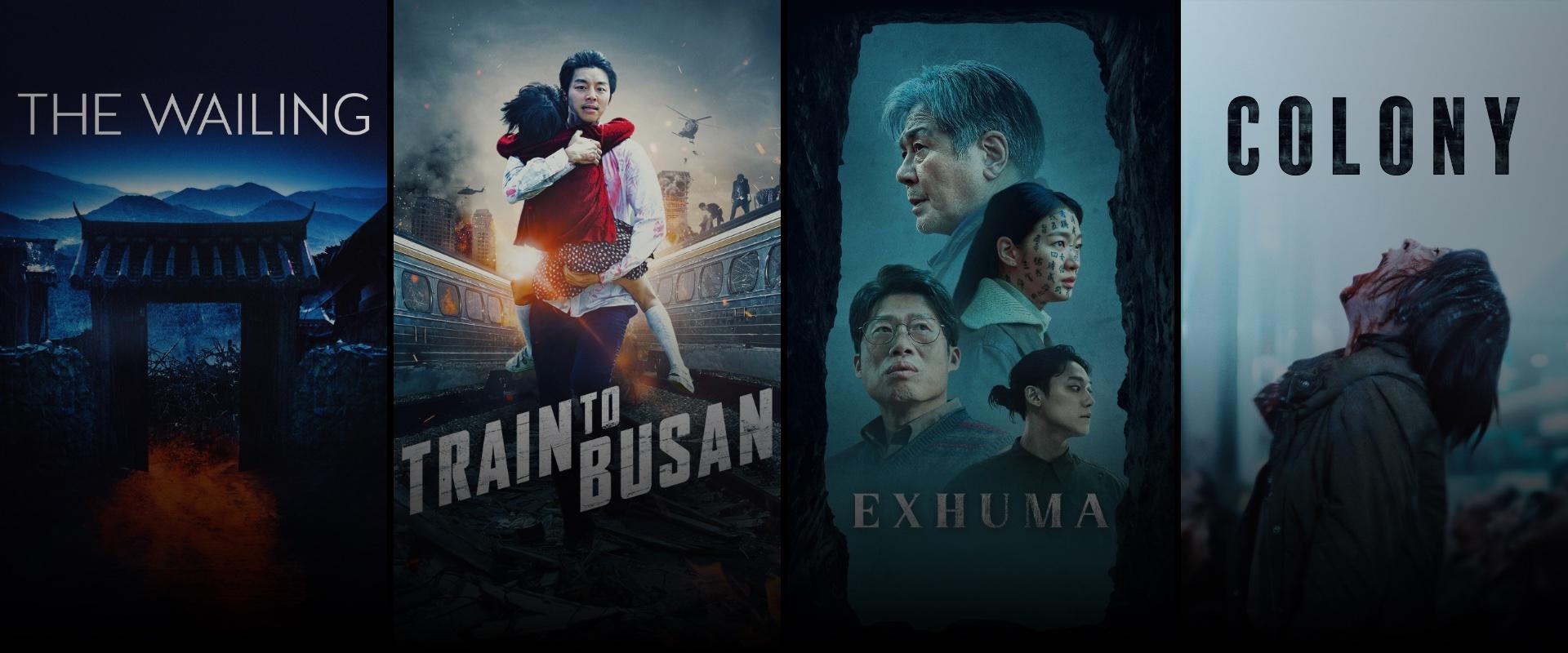
Best South Korean Horror Movies Ranked: 25 Films That Will Haunt You (2026 Update)
From The Wailing to Exhuma and 2026 hits Colony and Salmokji: the 25 best Korean horror movies, ranked using critics, fan votes and box office data.
24 min read ·