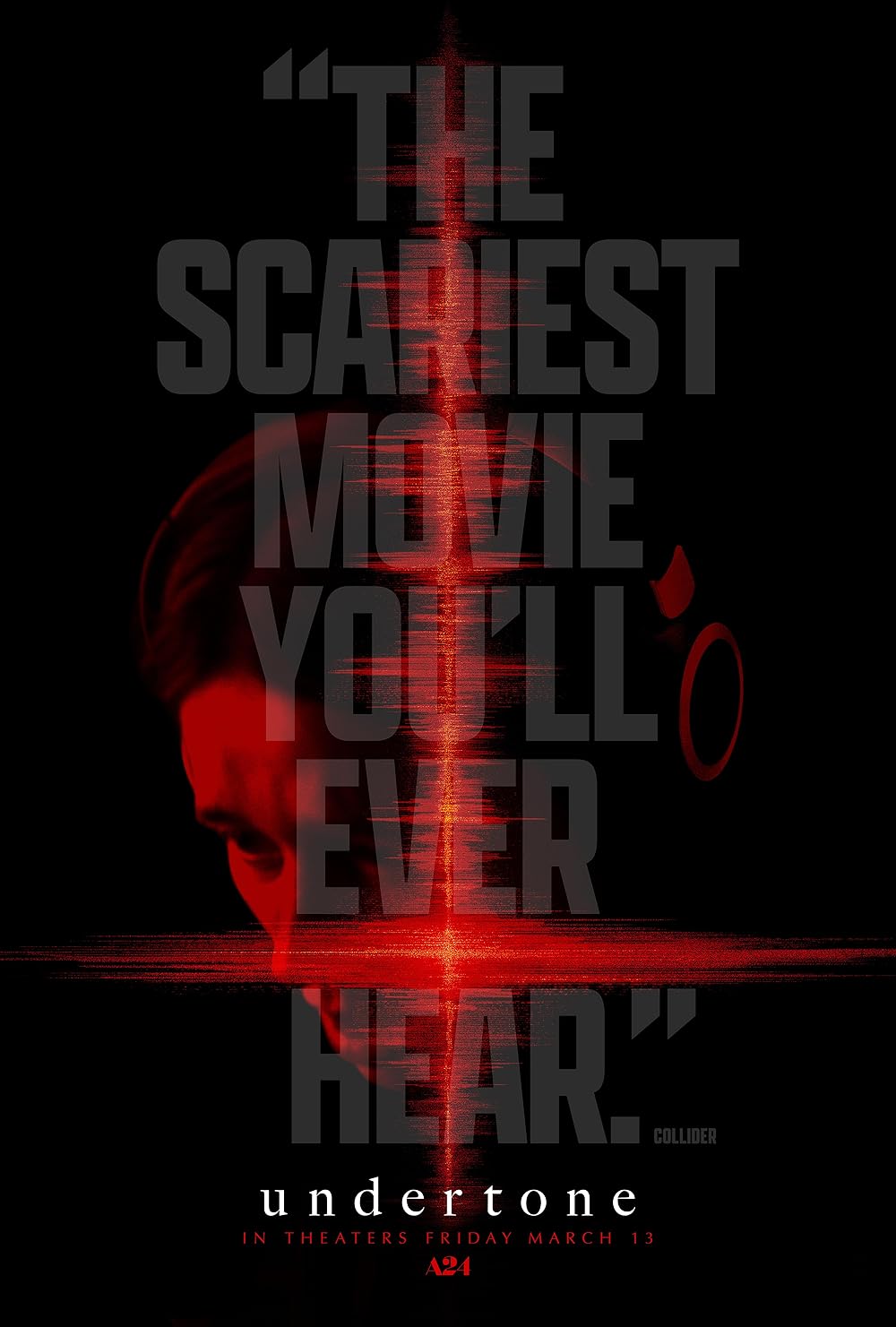





Undertone lives and dies by its auditory design. Nina Kiri commands the screen almost entirely on her own, spending long sequences sitting at a table, isolating frequency bands, rewinding analog tapes, and reacting to disquieting voices over her headphones. Her performance feels raw, frayed, and empathetic, grounding the escalating madness in the quiet exhaustion of palliative care and unresolved grief.
The camera work deliberately plays tricks on your peripheral vision. Cinematographer Graham Beasley frames doorways, empty hallways, and dark corners with wide, stagnant compositions that convince you something is lurking just out of focus. Instead of rushing to relieve the tension with a sudden sting, the movie lets the silence linger until you are physically leaning forward to hear what is coming.
While voice co-star Adam DiMarco offers vocal banter as the podcast believer, the film occasionally stumbles when leaning into typical expository lore dumps. However, once the connection between the recordings and Evy's isolated home becomes undeniable, the movie locks you into an agonizing sensory vice.


