
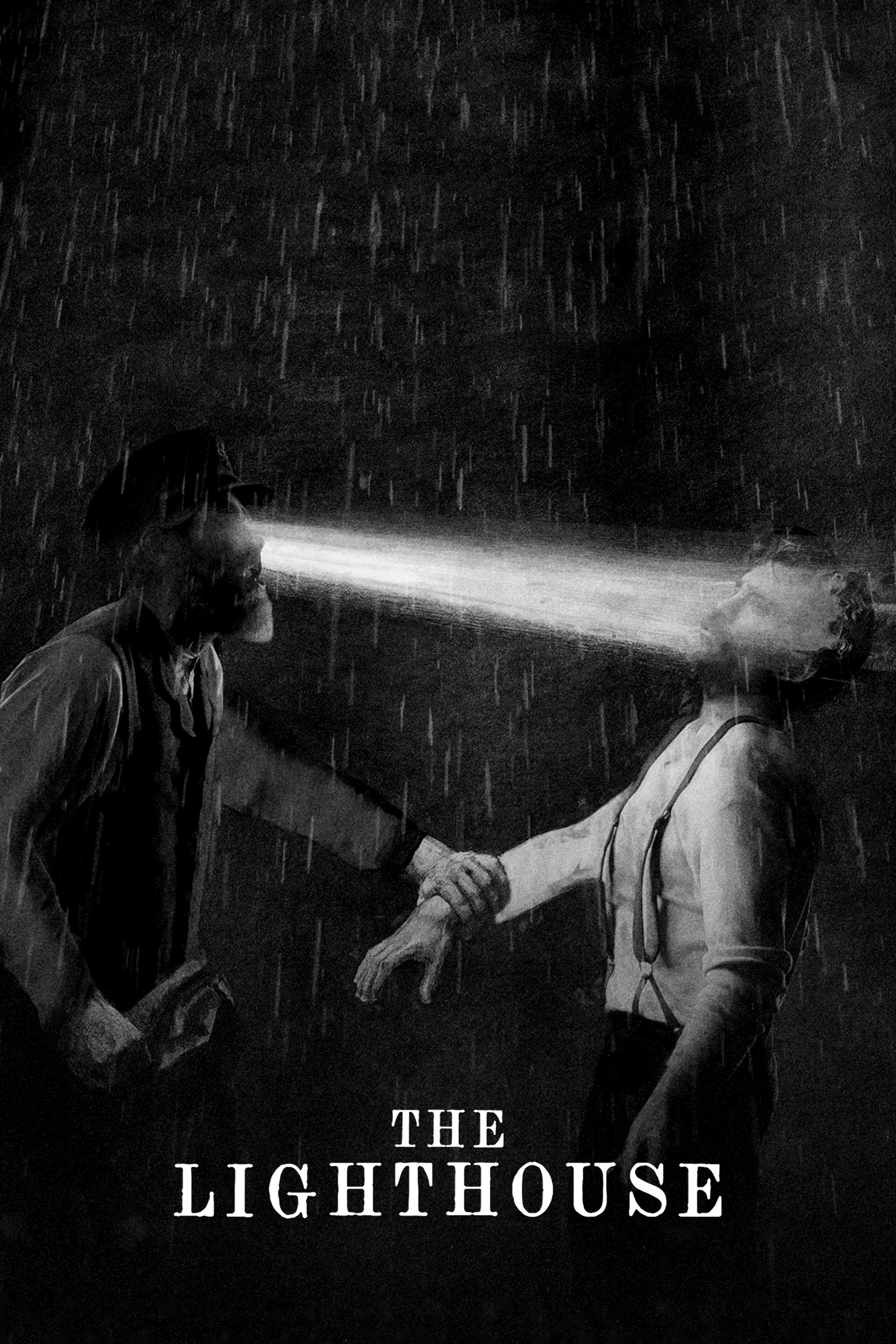
The Lighthouse (2019) Horror Movie Poster

The Lighthouse (2019)

Released: October 18, 2019
Runtime: 109 min
R
United States
English

Two men get trapped on a tiny rock in the middle of a raging ocean, and they slowly lose their minds. That is the simple setup of The Lighthouse, but what director Robert Eggers builds from it is pure madness. After scaring the world with The Witch in 2015, Eggers returned with an even bolder, weirder, and more hypnotic nightmare filmed entirely in harsh black-and-white. Starring Willem Dafoe and Robert Pattinson in two of the fiercest performances of their careers, the movie transports you to a lonely island off the coast of Maine in the 1890s. With howling winds, a foghorn that rattles your bones, and gallons of cheap liquor, the film traps you alongside these two men as their sanity slips away into the sea.


8.8/10

Horror Jungle Rating

IMDb
IMDb

7.4/10

IMDb Rating

Rotten TomatoesRotten Tomatoes

90%

Rotten Tomatoes

Watch TrailerWhere to Watch

Share this movie

Send it to friends or copy the link

Movie

The Lighthouse (2019)

The Lighthouse review: 8.8/10. Robert Pattinson and Willem Dafoe slowly go mad. What is in the light? Was the mermaid real? The ending explained.

Copy link

Share to social

QUICK HORROR SNAPSHOT

Atmosphere & Dread
10/10
Re-watch Value
8/10
Gore & Violence
7/10
Jump Scares
3/10
Psychological Terror
10/10
Overall Scare Factor
8/10
Tension & Suspense
9/10

Official Trailer

Where to watch

Updated September 27, 2026

Fandango at Home
Fandango at HomeUS
Rent/Buy
Apple TV
Apple TV
Rent/Buy
Google Play
Google Play
Rent/Buy
Amazon Prime Video
Amazon Prime VideoUS
Available
YouTube
YouTube
Rent/Buy

SHOULD YOU WATCH IT?

Worth Watching?A hypnotic, funny, and deeply terrifying piece of cinema that stands as one of the best psychological horror films of the century.
Yes
Watch Alone?The claustrophobic tension and madness can feel heavy and suffocating if you watch it completely by yourself late at night.
Maybe
Watch in the Dark?Pitch-black room lighting makes the glowing black-and-white cinematography and harsh shadows pop off the screen.
Yes
Good for Date Night?Between the bodily fluids, screeching arguments, and slow descent into madness, this is definitely not a casual romantic watch.
No
Watch With Parents?How comfortable it is to watch with parents.
No
Beginner Friendly?The slow pacing, old sailor dialect, and boxy aspect ratio may frustrate casual viewers looking for fast jump scares.
No
Family Friendly?How well it suits a family movie night.
No
Slow Burn?A deliberate, slow build of tension that starts with small annoyances and gradually spirals into pure manic fury.
Yes
Headphones Recommended?The booming foghorn, crying wind, crashing waves, and creepy whispers make for an incredible audio experience.
Yes
18+
Age RecommendationContains strong horror content, violence, and disturbing themes.
18+

Spoiler Free Review

The Lighthouse feels like finding a lost film reel from a century ago that was cursed by ancient sea gods. The first thing you notice is the look. Shot in a nearly square aspect ratio with vintage camera lenses, the frame feels tight and suffocating. You are trapped in small rooms with dirty walls, dripping pipes, and two men who clearly cannot stand each other. Robert Pattinson plays Ephraim Winslow, a quiet young man hired as the new assistant keeper for a four-week shift. Willem Dafoe plays Thomas Wake, an old, one-legged sea captain who treats the lighthouse like his own personal kingdom. Wake claims the lantern room at the top for himself and forces Winslow to do all the backbreaking dirty work, from shoveling heavy coal to cleaning grease and carrying bedpans. As the days crawl by, the sound design takes over. The relentless drone of the foghorn, the roar of the freezing rain, and the cry of seagulls create a wall of noise that never lets you breathe. Willem Dafoe delivers wild sea speeches with total conviction, while Pattinson slowly unravels from silent frustration into manic screaming. Their chemistry swings wildly from drunken hugs and sea songs to violent threats over dinner. It is hypnotic, darkly funny, and deeply disturbing all at once.

What Works

Powerhouse acting performances from both Willem Dafoe and Robert Pattinson
Stunning black-and-white cinematography that turns every frame into a piece of art
Terrifying sound design centered on a foghorn that sounds like a dying beast
Rich atmosphere of isolation that makes you feel the cold spray of the sea
Clever mix of dark sailor humor and cosmic psychological terror

What Doesn't Work

The thick 19th-century sailor dialect can be hard to follow without subtitles
The slow pacing in the second act might test the patience of viewers who want fast action
The surreal ending leaves many questions open for interpretation, which may bother fans who want simple answers

FINAL VERDICT:

The Lighthouse is a rare cinematic beast that refuses to play by modern horror rules. It is dirty, loud, funny, and deeply frightening in ways that crawl into your bones rather than just making you jump out of your seat. If you appreciate bold directing, fearless acting, and psychological slow-burn terror, this film is an absolute masterpiece.

spoiler-warning

Be Careful, Spoilers Ahead

Plot Summary (Spoilers)

In the late 1890s, former lumberjack Ephraim Winslow arrives on a rocky, storm-battered island off the coast of Maine. He is contracted to work for four weeks as an assistant lighthouse keeper under Thomas Wake, an eccentric and crusty veteran sailor. Wake makes it clear from day one that he is the boss. Wake keeps the keys to the lantern room locked away, working the night shift alone at the top, while forcing Winslow to do grueling physical labor all day. Winslow scrubs floors, carries heavy coal baskets up winding stairs, paints the tower, and empties foul chamber pots. While doing his chores, Winslow experiences unsettling visions. He sees slimy sea tentacles writhing inside the lighthouse gears, spots a dead body floating in the water, and finds a one-eyed seagull staring into his soul. Inside his mattress, Winslow discovers a tiny scrimshaw carving of a mermaid left behind by the previous assistant, who reportedly died after losing his mind. Tension between the two men grows. Winslow is constantly pestered by the aggressive one-eyed seagull. Wake warns him never to kill a seabird, claiming that seagulls hold the spirits of dead sailors. But during a frustrating afternoon, Winslow catches the bird pecking at the island water tank. In a burst of rage, Winslow grabs the gull by its legs and violently bashes its head against the rocks until it dies. Almost immediately, the wind changes direction. A vicious nor'easter storm slams into the island on the exact day Winslow's shift is supposed to end. The relief ferry cannot reach the island through the raging waves, leaving both men stranded with dwindling rations. Trapped indoors by the flooding storm, they turn to Wake's private stash of alcohol. As the booze flows, their relationship becomes chaotic. One night they dance, sing sea shanties, and share secrets. Winslow confesses that his real name is Thomas Howard, and that he assumed the identity of his former logging foreman, Ephraim Winslow, after letting him drown in a river accident. The next moment, they are screaming at each other in furious drunken brawls over Wake's cooking and hygiene. When the liquor runs out, they begin drinking a toxic mix of turpentine, water, and honey. Howard spots Wake standing naked at the top of the tower, glowing in the light with sea monster tentacles sprouting from his skin. Soon after, the storm shatters the living room window, flooding the house and ruining the remaining food. While digging up a buried crate of supplies, Howard discovers Wake's personal logbook. The notes reveal that Wake has written terrible lies about Howard, describing him as a lunatic and recommending that he be fired without a penny of pay. Howard confronts Wake. During an explosive fistfight, Howard overpowers the older man. Hallucinating that Wake is a monstrous sea creature, Howard beats him, puts a leash on him, makes him bark like a dog, and buries him alive in a muddy pit. Wake digs his way out and strikes Howard in the shoulder with an axe. Howard fights back with a shovel, repeatedly striking Wake until the old keeper is dead. Howard grabs the brass lantern key from Wake's neck and climbs the spiral stairs to the top of the lighthouse. Howard enters the lantern room and opens the glass door of the giant Fresnel lens. As he stares directly into the blazing light, he reaches in and touches the core. He starts laughing with intense joy, but his laughter quickly twists into screams of agony and horror. Overwhelmed by the light, Howard falls backward and tumbles down the metal spiral staircase.

Ending Explained

The final scene shows Howard lying naked and broken on the rocky shore of the island. He is badly wounded and barely alive. A flock of screaming seagulls surrounds his body, pecking into his open stomach and eating his liver and intestines while the ocean waves crash against the rocks. This ending is a direct reference to the ancient Greek myth of Prometheus. In mythology, Prometheus was a titan who stole sacred fire from the gods on Mount Olympus to give to humanity. As punishment, the gods chained him to a rock where an eagle returned every day to tear open his belly and eat his liver. In the movie, the blinding light at the top of the lighthouse represents that forbidden divine fire. Thomas Wake acted as the gatekeeper, warning Howard that the light belonged only to him. When Howard murdered Wake and touched the light, he learned secrets that human minds are not meant to see. His punishment was the same as Prometheus: broken on the rocks, his organs devoured by the very seabirds he was cursed for killing. The ending also confirms that both men were trapped in a cycle of guilt and illusion. Some viewers believe Wake and Howard were actually two sides of the same broken man, while others view Wake as Proteus, the mythical sea god who punished mortals for their arrogance. Either way, Howard's obsession with the light was his ultimate downfall.

Hidden Meaning & Symbolism

  • The Prometheus Myth: Howard stealing a look into the forbidden light and ending up with seagulls eating his liver mirrors the classical Greek punishment for stealing divine knowledge.

  • The God Proteus: Wake represents the ancient sea deity Proteus, an old man of the sea who commands storms, tells cryptic tales, and changes form into sea creatures.

  • Stolen Identity and Guilt: Howard is haunted by the real Winslow whom he left to drown, showing how unresolved guilt festers in isolation until it destroys a person.

  • Toxic Masculinity and Pride: The battle between the two men shows how stubborn pride, repressed emotions, and an inability to show weakness lead directly to violence.

  • The Light as an Unknowable Power: The lantern room represents an obsession with truth or godhood that promises ultimate salvation but destroys anyone who touches it.

Scariest Moments

1

Bludgeoning the One-Eyed Seagull: Winslow finally snaps from the bird's mocking stare and repeatedly smashes it against the stone wall, a bloody turning point that invites the cursed storm.

2

The Screeching Siren in the Cave: Winslow explores a wet sea cave and finds a naked mermaid washed on the rocks, only for her mouth to stretch open with an ear-piercing scream that sends him running in terror.

3

The Tentacle Vision at the Top: Peeking through the trapdoor into the glowing lantern room, Winslow sees Wake standing naked, bathed in white light with slimy tentacles squirming from his body.

4

The Muddy Shovel Fight: A raw, frantic brawl in the rain where Howard buries Wake alive, only for Wake to break free with an axe before Howard beats him to death with a shovel.

5

Devoured on the Rocks: The chilling final shot of Howard lying naked on the freezing rocks, staring blankly at the sky while seagulls tear out and eat his intestines.

Parents Guide / Trigger Warnings

Animal Death

Moderate

A seagull is graphically killed by being swung against a rock wall; later, a dead seagull is found rotting inside a water tank.

Graphic Gore

Moderate

Includes a bird beaten to death against stone, a shovel fight causing blunt head trauma, and a final shot of birds eating human guts.

Nudity

Moderate

Male full-frontal and rear nudity in non-sexual and surreal contexts, as well as a brief view of a mermaid with exposed breasts.

Sexual Content

Moderate

Features scenes of masturbation, sexual hallucinations involving a mermaid, and aggressive homoerotic subtext between the two men.

Suicide / Self Harm

Mild

No direct suicide, but characters consume dangerous levels of turpentine and knowingly ruin their physical health.

Child Death / Peril

None

No children appear in the film.

Trigger Warning Notes:

This film contains depictions of extreme psychological breakdown, animal cruelty involving the violent beating of a bird, graphic body gore, brief non-sexual and sexual nudity, and heavy alcohol poisoning.

Trivia

  • Director Robert Eggers and his brother Max Eggers spent months researching 19th-century sailor journals and Herman Melville writings to write dialogue that matched the authentic dialect of the 1890s.

  • The lighthouse set was constructed from scratch on Cape Forchu in Nova Scotia, Canada, and was fully functional, featuring a working 70-foot tower that could withstand real freezing Atlantic storms.

  • Robert Pattinson hated the idea of doing rehearsals before shooting, while Willem Dafoe loved rehearsing theater style, which created real-life tension that fed into their on-screen rivalry.

  • To portray the physical toll of his character, Robert Pattinson spent scenes putting pebbles in his shoes, spinning in circles until dizzy, and drinking real alcohol to make his performance look messy and authentic.

  • The movie was shot on 35mm black-and-white film using vintage lenses from the 1930s and a custom camera filter that made skin look weathered and rough like old tintype photographs.

FAQS (Frequently Asked Questions)

What did Howard see in the light at the end of The Lighthouse?

The film does not show what was inside the lantern, leaving it as an unknowable cosmic mystery. It represents forbidden knowledge or divine truth that overwhelms the human mind, driving Howard to laugh hysterically before tumbling to his death.

Is The Lighthouse based on a true story?

It is loosely inspired by the 1801 Smalls Lighthouse tragedy in Wales, where two keepers named Thomas were stranded during a massive storm, resulting in one keeper dying and the survivor losing his sanity.

Why did Winslow kill the seagull in The Lighthouse?

Winslow killed the seagull out of frustration and anger because the one-eyed bird kept tormenting him. Killing the bird broke the ancient sailor superstition, which Thomas Wake warned would bring a cursed storm upon them.

Did the mermaid actually exist or was it a hallucination?

The mermaid is most likely a hallucination born from Winslow's isolation, sexual frustration, and guilt. It symbolizes dangerous sirens from maritime folklore that lure sailors to their deaths.

What does the ending of The Lighthouse mean?

The ending is a direct tribute to the myth of Prometheus. Howard stole the forbidden light, and his punishment is lying broken on the shore while birds devour his liver for eternity.

Who is Thomas Wake supposed to be?

Wake represents Proteus, the mythical Greek sea god who could predict the future and change his shape. He acts as the keeper of the sea and the light, testing Howard's resolve until Howard snaps.

Why did Winslow change his name to Thomas Howard?

Howard took the name of Ephraim Winslow, his former boss at a lumber company who died in a river accident that Howard failed to prevent. Howard stole his identity to escape his past and find work.

Is there any post-credits scene in The Lighthouse?

No, there is no scene after the credits. The movie ends definitively on the bleak, haunting image of Howard on the rocks.

Movie Information

Original Title

The Lighthouse

Release Date

October 18, 2019

Runtime

109 min

Country

United States

Language

English

Status

Released

Director

Robert Eggers

Writer

Robert Eggers, Max Eggers

Main Cast

Willem Dafoe, Robert Pattinson, Valeriia Karaman, Logan Hawkes

Production Company

Regency Enterprises, RT Features, Parts & Labor

IMDb Page

View on IMDb

Also Known As

The Lighthouse, O Farol, Der Leuchtturm, El Faro